
In the darkest chambers of geopolitical conflict…
a seismic shift has just occurred.
For decades, the Taiwan Strait simmered like a dormant volcano—its silence,
more dangerous than its roar.
But now, in a decision that stunned the international community,
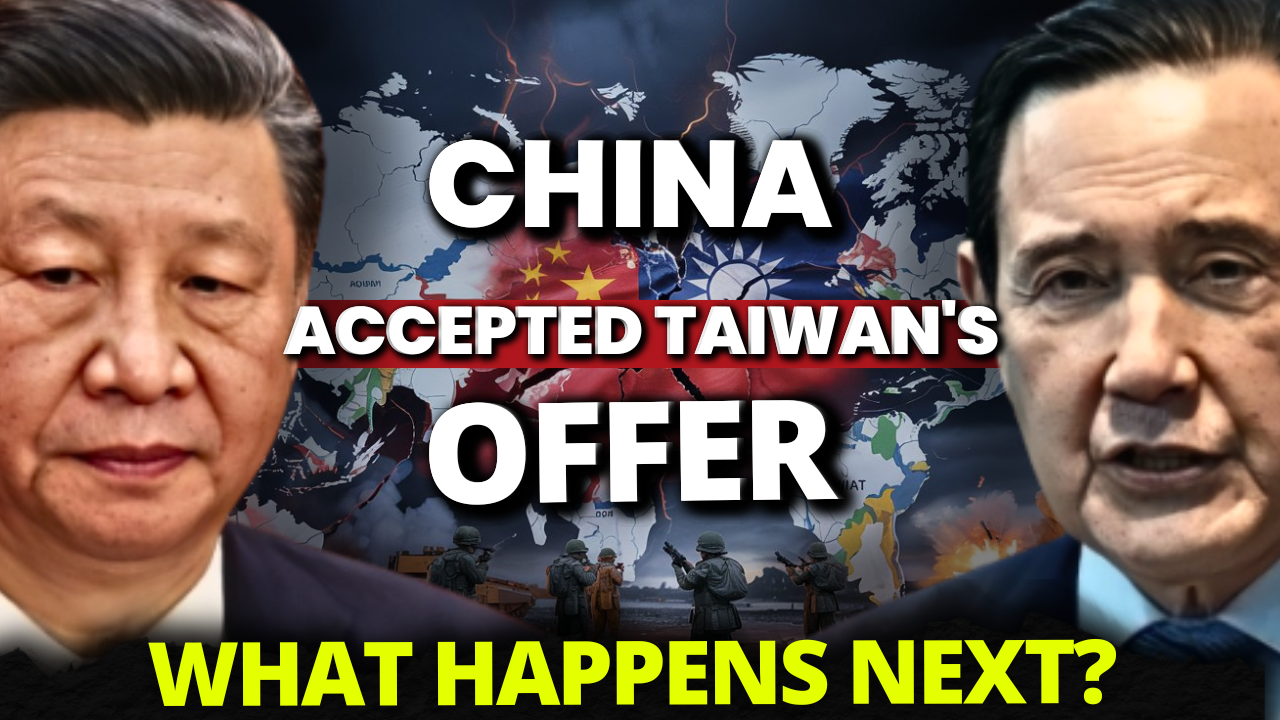
Beijing has accepted an unprecedented offer from Taipei.
The question echoing across military war rooms,
diplomatic halls, and financial markets is chilling—
what happens now?
You are watching a moment in history where power,
identity, and the fate of nations collide.
This isn’t just politics. It’s a redefining moment for the Indo-Pacific.
Before we begin, don’t forget to like, subscribe, and hit the notification bell.
Because what you’re about to hear… might just Shocked you.
Now… let’s break it down.
The Unexpected Breakthrough
It happened quietly, without the usual blare of state media or aggressive military posturing. Yet, the announcement carried a resonance louder and potentially more impactful than any battlefield gunshot across the Taiwan Strait.
China accepted an offer from Taiwan—an offer not of surrender or immediate unification, but specifically for diplomatic dialogue and limited cooperation on defined mutual interests.
This represented a middle ground, a space for engagement never before seriously considered or formally accepted by Beijing in recent decades. It bypassed maximalist demands from either side to find a sliver of common ground.
The significance of this acceptance cannot be overstated in the long history of cross-strait relations. This marks the first time since the nebulous 1992 Consensus, a historical point of agreement often interpreted differently by both sides, that such overtures for direct, issue-specific dialogue have gained tangible traction with mainland China.
What catalyzed this seemingly improbable breakthrough after years of deadlock? A confluence of intense pressures bore down simultaneously on both Beijing and Taipei, pushing them towards a breaking point in their long-standing standoff.
Both territories were grappling with significant economic slowdowns, exacerbated by global instability, trade tensions, and supply chain disruptions. The mounting economic costs of perpetual tension and military readiness were weighing heavily on their respective economies.
Simultaneously, mounting pressure from international stakeholders played a crucial role in urging de-escalation. Global powers, keenly aware of the potentially catastrophic consequences of a conflict over Taiwan for the world economy and stability, exerted diplomatic and economic influence behind the scenes.
The growing, palpable threat of imminent conflict served as perhaps the most immediate and undeniable catalyst for reconsidering approaches. The sheer frequency and scale of military provocations by the mainland had reached alarming levels in the preceding months.
With over 600 Chinese military incursions into Taiwan’s Air Defense Identification Zone and surrounding waters reported in the past year alone, the margin for error had narrowed to a razor’s edge. A single accident or miscalculation could easily have triggered a wider confrontation with global repercussions.
In this tense and dangerous environment, Taiwan’s President, known internationally for her pragmatic yet firm leadership in navigating cross-strait relations, extended a carefully calculated offer. It was designed to be difficult for Beijing to outright dismiss while preserving Taiwan’s autonomy.
The proposal strategically focused on areas of undeniable mutual interest, seeking to build confidence through practical cooperation rather than contentious political issues. Key elements included cross-strait economic synergy, exploring ways to benefit both economies despite political differences. Maritime security cooperation was also on the table, acknowledging shared interests in maintaining safe passage through busy regional waters.
Finally, pandemic preparedness was included, a clear reminder of shared vulnerabilities beyond political divides that require joint efforts.
And shockingly, after years of dismissing such overtures and insisting on preconditions unacceptable to Taipei, Beijing… did not reject it. This subtle shift in response was immediately recognized as potentially momentous by seasoned observers of cross-strait dynamics.
While far from full recognition or movement towards political unification, Beijing’s willingness to even entertain limited dialogue on specific issues signaled a potential, albeit fragile, opening in the seemingly intractable cross-strait dynamic. It suggested that even deeply entrenched hardline positions can bend under sufficient pressure and changing circumstances.
Why Now? China’s Strategic Pivot
China’s unexpected acceptance of dialogue with Taiwan was not a gesture of newfound goodwill or a sudden softening of its long-held, hardline position. Instead, it was a calculated move rooted in cold, hard strategy, driven by pressing domestic and international realities.
Several converging factors compelled Beijing to reconsider its approach to the Taiwan Strait. Chief among these was the growing pressure on its domestic economy, which was no longer exhibiting the robust growth rates of previous decades.
China’s economy was growing at a significantly slower rate than planned, registering 4.8% in 2024. Compounding this economic headwind was a spiking youth unemployment rate, officially exceeding 16%, but widely believed to be higher, posing a potential risk for social stability.
Added to the economic challenges were the rapidly rising, potentially staggering costs of a potential military confrontation over Taiwan. Beijing was forced to confront the multifaceted price tag of initiating a war in the Strait.
Economically, a conflict would invite crippling international sanctions from major trading partners and devastate critical global supply chains upon which China’s vast manufacturing base relies. Diplomatically, it would lead to widespread international condemnation and solidify alliances aimed at containing China’s global influence.
Domestically, the costs included the potential for significant social unrest from casualties or economic hardship caused by conflict, and significant political risk for the leadership if the military action did not proceed swiftly or successfully.
Beneath the carefully controlled surface of Chinese society, internal dissent was also quietly growing. Despite sophisticated censorship mechanisms and pervasive surveillance, whispers of economic dissatisfaction and governance fatigue were rippling through the population.
The prolonged economic slowdown, coupled with issues ranging from a struggling housing market to mounting local government debt, fueled underlying public discontent, even if it wasn’t openly displayed in mass protests.
In this complex domestic and international backdrop, President Xi Jinping, while seemingly secure in his consolidation of power, remained acutely watchful of any threats to stability. He was compelled to consider recalibrating China’s immediate strategy towards Taiwan.
This recalibration wasn’t a change in long-term goals regarding reunification, but rather an adaptation of tactics to the new, challenging realities. Recognizing the confluence of economic pressures, international scrutiny, and the high costs of conflict, a purely confrontational stance on Taiwan was becoming increasingly unsustainable in the short to medium term.
Against this backdrop of converging pressures, Taiwan’s pragmatic proposal offered Beijing a rare and valuable opportunity to achieve several strategic objectives without overtly compromising its core principles regarding Taiwan’s ultimate status.
Accepting dialogue could immediately help reduce regional tension, providing a justification to potentially scale back costly and risky military incursions that were heightening the risk of accidental conflict. It offered a pathway to revive cross-strait economic channels that had been strained by political friction.
Crucially, it allowed Beijing to strategically control the narrative globally and domestically, presenting itself internationally as reasonable and open to dialogue, potentially shifting blame for any future escalations back onto Taiwan or external forces perceived as hindering peace.
But this opportunity came at a definite price for Beijing’s hardline position. Engaging with Taipei on a more equal footing in dialogue, even on limited issues, required making certain concessions, however small, from its maximalist “one China” principle regarding Taiwan’s lack of sovereign status.
There was also the significant cost of the perception of compromise, both domestically among hardline elements who prefer a purely forceful approach to reunification and internationally among those observing China’s resolve. Any dialogue could be spun by critics as weakness or a deviation from the long-held dream of swift, forceful reunification.
Ultimately, accepting a “middle ground” dialogue potentially reshaped the immediate timeline and approach to the reunification dream. It acknowledged that, for now, outright absorption was too costly and risky given the prevailing conditions, requiring a temporary, tactical shift in strategy to navigate the current storm.
Taiwan’s Calculated Gamble
From the vantage point of Taipei, the recent overtures to Beijing are anything but a concession; they represent a calculated, strategic maneuver. Taiwan unequivocally maintains its independent governance and vibrant democratic identity, a spirit subtly yet significantly buttressed by a network of global allies who recognize the critical importance of the island’s autonomy. Taiwan has, through deliberate national effort, forged itself into an indispensable technological titan, commanding over 60% of the world’s semiconductor production – a reality that grants it a unique, powerful form of leverage on the international stage, often referred to as a “silicon shield.”
Yet, the pressure is unyielding. The stark military asymmetry, with Taiwan’s active personnel a mere fraction of China’s vast forces, underscores the precariousness of its position. Diplomatic recognition remains limited, forcing Taiwan to walk a perpetual tightrope in the international arena.
This diplomatic outreach to Beijing, therefore, is not born of weakness, but rather a carefully calibrated demonstration of strength and a clear assertion of agency. It extends an invitation for peaceful engagement while simultaneously delineating firm boundaries that preserve Taiwan’s sovereignty and way of life. Analysts widely interpret this as a deliberate strategy to gain crucial time – time to solidify and expand its international partnerships, to bolster its asymmetrical defense capabilities with modern technologies like drones, and to enhance whole-of-society resilience. It is a strategy aimed at fortifying the island against all potential eventualities, ensuring that Taiwan is not merely reacting to external pressures but proactively shaping its own future from a position of greater strength and preparedness.
Regional Reactions – Allies and Adversaries Weigh In
Across the Indo-Pacific and beyond, capitals are keenly observing Taipei’s diplomatic recalibration, each calculating their own position in a shifting geopolitical landscape. From Washington, Taiwan’s principal security underwriter, came a carefully worded affirmation. President Biden’s sentiment that “Peaceful dialogue is always preferable to the drumbeat of war” underscored the US desire for de-escalation while reaffirming a commitment to stability in the Strait and the provision of defensive capabilities to the island, a policy consistent across administrations despite debates on its specifics.
Japan, acutely aware of the potential for regional instability spilling into its own backyard from an assertive China, echoed support for peaceful resolution. Tokyo stressed the vital importance of cross-strait peace and stability for international security and prosperity, coupling its encouragement with calls for transparency and the upholding of democratic values in Taiwan – a reflection of deepening unofficial ties and shared strategic concerns. Nations within ASEAN, weary of the long shadow cast by potential conflict, generally welcomed any move towards dialogue that could reduce tensions and safeguard the vital trade routes that crisscross the region, prioritizing the stability necessary for their economic growth.
However, the move was not met with universal approval. From Pyongyang, predictably, came condemnation, framing the development through the lens of “Western manipulation” aimed at undermining regional stability and challenging Beijing. Russia, a close strategic partner of China, maintained a notable silence publicly but watched intently, its focus likely on how this impacts the delicate balance of power and China’s approach to its territorial claims, aligning with Beijing’s “One China” principle in its official statements. Meanwhile, key regional players like India and South Korea, while expressing cautious optimism regarding the potential for reduced tensions, remain watchful. Both nations have significant economic ties with both China and Taiwan and are navigating their own complex relationships, hoping for a lasting calm that preserves regional stability and their own strategic flexibility.
Military Implications – The Calm Before Another Storm?
Despite the unexpected diplomatic breakthrough and the initiation of limited dialogue between Beijing and Taipei, the military postures of both China and Taiwan remain, for now, fundamentally unchanged. The political opening has not yet translated into a significant reduction in military readiness or activity in the Strait.
China’s People’s Liberation Army, particularly its burgeoning Navy and Air Force, continues its pattern of expansion and assertive operations throughout the region. PLA Navy ships and aircraft maintain, and in some contested areas like the South China Sea, even expand their operational presence and frequency of patrols.
These continued exercises and patrols, while not always directly targeting Taiwan in the immediate moment, underscore China’s ongoing military modernization and its long-term power projection goals in the Indo-Pacific theatre. They signal no fundamental shift in military ambition.
Simultaneously, Taiwan’s defense forces continue their rigorous training and strategic partnerships with key international allies. The island nation maintains regular joint drills with partners, most notably the United States and Japan, nations deeply invested in regional stability.
These exercises focus intensely on enhancing Taiwan’s asymmetric defensive capabilities, improving interoperability with potential international support forces, and clearly demonstrating international commitment to Taiwan’s security. They are a crucial counter-signal to Beijing’s persistent military pressure.
Beneath the surface of diplomatic exchanges and cautious public statements, the complex machinery of potential conflict remains fully operational and prepared. War simulations are still routinely conducted by both sides, meticulously planning for various scenarios of invasion, defense, and regional intervention.
Missiles capable of striking targets across the Strait, including critical infrastructure on both sides, remain fully fueled and ready for immediate deployment. High-resolution surveillance satellites scan the skies constantly, monitoring troop movements, naval deployments, and any potential signs of hostile intent from either side around the clock.
Trust, in this highly tense and uncertain environment, is not built on genuine goodwill or shared historical affinity. It is strictly transactional – limited explicitly to the specific areas of agreed-upon cooperation and conditional entirely on the behavior of the other party in upholding the narrow terms of the dialogue.
Analysts universally warn that this fragile detente, this temporary easing of tensions achieved through limited dialogue, could unravel within hours if circumstances change. The situation across the Taiwan Strait remains inherently unstable and susceptible to disruption.
Any misstep by either side, whether accidental or intentional, could be immediately misinterpreted as hostile intent by the other. Any perceived betrayal of the limited understanding or the terms of the dialogue could instantaneously trigger a rapid escalation back to, or even beyond, the previous dangerous levels of tension and military posturing.
Moreover, the absence of overt large-scale military maneuvers specifically targeting each other does not mean a cessation of all hostile activity. A constant stream of threats and low-level conflict persists beneath the surface of official diplomacy and public statements.
Cyber threats targeting critical infrastructure in both territories continue unabated, alongside persistent small-scale drone incursions into sensitive airspace or waters. Sophisticated misinformation and disinformation campaigns are actively waged by both sides, seeking to influence domestic and international opinion and sow distrust.
Military commanders from both mainland China and Taiwan, while often silent in public during diplomatic phases, remain on extremely high alert at all times. Their forces stand poised for immediate action.
The intricate planning and readiness achieved over years of tension have not been dismantled or scaled back. They stand ready, waiting for any signal, any perceived provocation, that the fragile diplomatic opening has closed and the possibility of conflict has returned to the forefront.
So, while a form of peace exists across the Taiwan Strait following this unexpected dialogue breakthrough, its nature must be clearly understood. The peace is real in the sense that open, large-scale conflict has been momentarily avoided through cautious engagement.
But it is also, by all indications from military postures and underlying activities, temporary. It is best characterized as a calm before another potential storm, held precariously in place by cautious steps and the mutual, albeit transactional, recognition that the costs of immediate conflict remain too high for now.
The Economic Domino Effect
The news has already shaken global markets. Semiconductor stocks surged. Asian currency markets saw minor gains. Oil prices dipped as fears of conflict cooled.
For China, this détente opens new investment channels and stabilizes manufacturing relationships strained by recent sanctions. For Taiwan, it offers safer export routes, greater participation in regional trade, and potential access to China’s vast consumer base.
Multinational corporations are watching closely—especially Apple, TSMC, and Tesla—whose operations could be severely affected by any future instability. Investors, cautious but curious, are re-entering a region once deemed too volatile.
Historical Comparisons and Lessons
History offers eerie parallels. In 1971, the world watched as the U.S. opened relations with China—an unthinkable move at the time. Today, the China-Taiwan shift echoes similar shockwaves.
Yet the stakes now are higher. Nuclear weapons, cyberwarfare, AI-driven surveillance—all are game-changers.
The fall of the Berlin Wall. The Camp David Accords. The Oslo Agreement. Each moment of diplomacy came with hope… and peril.
Will this current chapter be remembered as a breakthrough—or a tactical pause before a larger collision?
What Happens Next?
This is the question haunting global powers. Will Beijing honor dialogue? Or use it as leverage? Will Taipei push further or pull back?
There’s a growing call for a formal ‘cross-strait code of conduct,’ akin to the South China Sea agreements. Negotiators are rumored to be meeting in neutral territories like Geneva and Singapore.
Some predict the emergence of a ‘Taiwan Clause’—an unprecedented international framework governing economic, cultural, and limited diplomatic exchange without altering sovereignty claims.
Others are less optimistic, warning that any illusion of peace might simply be camouflage for strategic recalibration.
The world stands on a razor’s edge. Peace is possible—but so is deception. This moment, this choice between dialogue and discord, will define the next generation of geopolitics in East Asia.
Taiwan offered a path forward. China accepted… but the road ahead remains unlit, unsteady, and unpredictable.
As night falls over the Taiwan Strait, one truth remains clear: the game has changed, and the players are moving.


Leave a Reply