
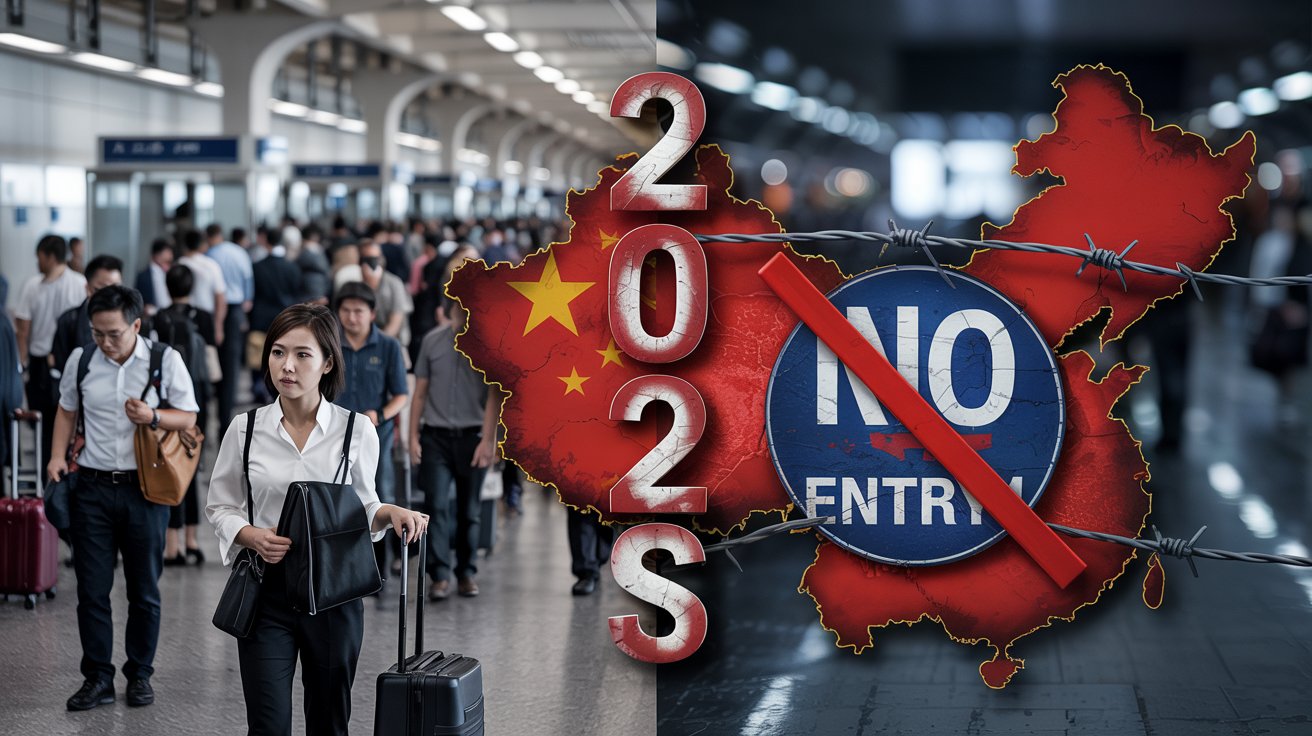
In the silent corridors of global power… a shadow looms.
Not from missiles… not from tanks…
But from factories. From shipping lanes. From digital dominion.
One nation has risen, not with noise, but with necessity.
And for some countries… their very survival now hangs on Beijing’s every move.
This… is not a warning. It’s not speculation.
This is the new world order.
Tonight — we reveal the 10 countries that simply… can’t survive without China in 2025.
Stay with us.
Before we plunge into this eye-opening world of geopolitics and economic dependence, make sure you like this video, subscribe to the channel, and share your thoughts in the comments. Your voice matters more than ever in this ever-shifting world. Let’s uncover the truth… together.
In 2025, China is no longer just a country. It is an ecosystem — one that powers entire nations, fuels governments, and sustains the pulse of daily life across the globe.
With a GDP exceeding 20 trillion dollars and controlling over 28% of global manufacturing, China isn’t just the world’s factory — it’s the lifeline.
From mineral supplies to advanced electronics, from green energy to rare earth dominance — Beijing’s reach is absolute. And for 10 countries in particular… their economic heartbeat is no longer their own.
Let’s begin.
COUNTRY 1 – Pakistan
Few alliances in the modern world are as strategically significant as the enduring partnership between Pakistan and China. In 2025, this bond continues to thrive, driven largely by the massive China-Pakistan Economic Corridor (CPEC) — a transformative $62 billion initiative forming the backbone of Pakistan’s infrastructure and energy future.
CPEC is more than a development project; it’s a lifeline. It links China’s western Xinjiang province to Pakistan’s Gwadar Port on the Arabian Sea, encompassing highways, railways, power plants, and special economic zones. Today, China funds around 25% of Pakistan’s infrastructure projects and supplies nearly 40% of its military equipment. This deep military cooperation strengthens Pakistan’s defense capabilities, especially in the face of regional tensions with India and Afghanistan.
Perhaps most significantly, Gwadar Port, a strategic outpost in Balochistan, is now operated by Chinese interests. This gives Beijing a critical maritime foothold in the Indian Ocean while offering Pakistan potential trade and economic uplift — though critics argue that benefits disproportionately favor China. Islamabad, heavily indebted and economically fragile, has become increasingly dependent on Chinese loans and investment. Many of these loans are on high-interest terms, with repayments putting immense pressure on Pakistan’s economy.
Beyond economics, the alliance has reshaped geopolitics in South Asia. China’s diplomatic shield at forums like the UN protects Pakistan from international scrutiny, especially regarding its stance on Kashmir and counterterrorism concerns. In return, Pakistan supports China’s positions on Taiwan, Xinjiang, and the South China Sea.
In essence, Pakistan’s future is now deeply interwoven with Beijing’s strategic goals. While some see this as a necessary partnership for survival, others view it as a slow slide into dependency. One thing is clear: without China’s continued financial support and infrastructure backing, Pakistan risks economic stagnation — or even collapse.
COUNTRY 2 – Laos
Laos, a small, landlocked country nestled in Southeast Asia, has undergone a quiet but dramatic transformation into what many now consider a satellite economy of China. In 2025, the scale of Chinese influence is evident across every corner of the country — from railways and roads to power grids and communication systems.
At the heart of this transformation is the $6 billion high-speed railway connecting the Laotian capital, Vientiane, to Kunming in China’s Yunnan province. While touted as a development milestone for Laos, the project primarily serves Beijing’s ambition to create a seamless trade and transit route through the heart of Southeast Asia. The railway, financed and built by Chinese entities, has left Laos heavily indebted — and the economic benefits for local communities remain limited.
More than 45% of Laos’ total public debt is now owed to China, placing immense strain on its already fragile economy. Infrastructure development, while impressive on paper, has not translated into broad-based growth. Chinese firms often import their own workers and materials, limiting job creation and local economic stimulation. Telecom networks, highways, and even portions of the national power grid have come under Chinese influence or partial control.
In 2025, concerns of economic default loom large in Vientiane. Servicing the rising debt burden is becoming increasingly difficult, especially as revenue from the railway and other Chinese-funded projects has fallen short of projections. Many fear that strategic national assets could soon be handed over to Beijing as collateral, mirroring Sri Lanka’s Hambantota port experience.
Without China’s ongoing financial support, Laos would likely descend into economic crisis. Yet with every loan and investment, its sovereignty seems to erode a little more. For now, the nation walks a fine line between development and dependency — with Beijing holding the balance.
COUNTRY 3 – Zimbabwe
In the heart of southern Africa, Zimbabwe is a land rich in natural resources — from vast gold deposits to some of the world’s most coveted lithium reserves. Yet despite its wealth beneath the ground, the country has long struggled with economic instability, international isolation, and a lack of investment. Enter China — a partner willing to invest where the West turned away, and one that has reshaped Zimbabwe’s development trajectory by 2025.
Today, nearly 70% of Zimbabwe’s key infrastructure projects — including highways, hydroelectric dams, and thermal power plants — are funded and often built by Chinese firms. These projects are not only reviving Zimbabwe’s aging infrastructure but also entrenching Beijing’s presence across the nation. In sectors like energy and transport, Chinese companies now dominate the landscape, often negotiating deals that prioritize access over transparency.
But nowhere is China’s influence more critical than in the booming lithium industry. As the global demand for electric vehicles and green energy solutions surges, Zimbabwe’s lithium — sometimes dubbed “white gold” — has become a geopolitical prize. Chinese corporations now control major lithium mines and processing facilities, ensuring a direct pipeline of this vital mineral to Beijing’s tech and automotive sectors.
In exchange, Zimbabwe receives much-needed capital, jobs, and infrastructure. For a government facing inflation, debt, and weak currency, China offers not just investment, but political support on the international stage. However, critics argue that the relationship is increasingly one-sided, with Zimbabwe ceding too much control over its resources and future in return for short-term survival.
In 2025, Zimbabwe’s lifeline is unmistakably tied to China. Beijing gains access and influence; Harare gains breathing room. The question remains: at what long-term cost does this oxygen come?
COUNTRY 4 – Cambodia
The skyline of Phnom Penh, Cambodia’s capital, now gleams with high-rise towers, luxury condominiums, and sprawling casino complexes — a dramatic transformation that tells a very specific story. But in 2025, it’s clear that the author behind much of this urban evolution is not Cambodia itself, but China.
Chinese capital has become the lifeblood of Cambodia’s development. From glitzy real estate ventures to massive infrastructure projects and booming casino towns like Sihanoukville, Chinese investors and firms have left an unmistakable imprint. Nearly 45% of Cambodia’s foreign direct investment now originates from China, making it by far the most influential economic player in the country. Hotels, bridges, highways, and special economic zones have all risen rapidly, built with Chinese financing, expertise, and often labor.
Beyond infrastructure, Chinese tourism plays a huge role in Cambodia’s economy. Tourists from China outnumber all others, flooding into Cambodia’s resorts, casinos, and cultural landmarks. Chinese businesses dominate major sectors, often pushing out local competition and altering the social and economic fabric of entire cities.
Politically, the relationship is just as deep. The Cambodian government is closely aligned with Beijing, relying heavily on Chinese diplomatic backing and military assistance. In international forums, Cambodia routinely echoes China’s positions — whether on the South China Sea, Taiwan, or human rights issues — and has even used its ASEAN membership to block criticisms of Beijing.
This deep reliance has raised concerns over sovereignty and long-term national interest. While Chinese investment has undeniably modernized parts of the country and brought rapid growth, it has also created dependencies that few dare challenge.
In 2025, Cambodia’s transformation continues — shaped by Chinese hands, powered by Chinese money, and steered, more often than not, in Beijing’s favor.
COUNTRY 5 – Serbia
In the heart of the Balkans, Serbia stands at a geopolitical crossroads — officially aspiring to join the European Union, yet quietly binding itself to the East through an expanding partnership with China. By 2025, this delicate balancing act has tilted noticeably, with Chinese influence deeply embedded in Serbia’s economy, infrastructure, and diplomacy.
One of the most visible symbols of this partnership is the Belgrade-Budapest high-speed railway — a flagship project under China’s Belt and Road Initiative. Financed and built largely by Chinese companies, it aims to connect Serbia more efficiently with both Central Europe and China’s larger logistical web. But this is just one piece of a broader Chinese footprint.
China now owns some of Serbia’s largest industrial assets, including the Smederevo steel mill, a formerly struggling enterprise revived with Chinese investment and now a symbol of industrial recovery. Chinese technology giant Huawei has also established a powerful presence, developing smart surveillance systems and digital infrastructure throughout the country — sparking concerns from EU partners over privacy and strategic autonomy.
In 2025, China is more than just an economic benefactor for Serbia; it’s a diplomatic ally. At the United Nations and other global forums, Beijing provides political backing, particularly on the sensitive issue of Kosovo’s recognition. In return, Serbia often supports Chinese positions on international matters, reinforcing their mutual interests.
Though Serbia continues to court EU membership, its growing economic dependency on China complicates the narrative. With Chinese funding revitalizing key sectors and Chinese companies embedded in national infrastructure, Belgrade cannot easily walk away from this partnership — even if Brussels disapproves.
For now, Serbia leans on Beijing for recovery, modernization, and global support. Severing this lifeline could mean economic disruption and diplomatic isolation — a price Serbia is unwilling to pay.
COUNTRY 6 – Ethiopia
Ethiopia, Africa’s second-most populous nation, has long been seen as a rising giant — a country with grand ambitions for industrialization and regional leadership. But behind its rapid transformation lies a powerful and often overlooked force: China. By 2025, Beijing’s imprint on Ethiopia’s development is undeniable, and its grip increasingly tight.
The skyline of Addis Ababa, with its modern buildings, glimmering conference centers, and wide boulevards, owes much of its makeover to Chinese investment. Major infrastructure projects — from expressways and railways to power stations and industrial parks — have been funded, built, and often operated by Chinese firms. The Addis-Djibouti Railway, a critical trade route connecting landlocked Ethiopia to the sea, stands as a flagship example of this cooperation.
China’s presence goes far beyond construction. It has taken a lead role in Ethiopia’s telecom revolution, partnering with state-owned Ethio Telecom to expand mobile networks, internet access, and even surveillance systems. In manufacturing, Chinese companies dominate several industrial zones, bringing jobs and machinery but often operating under Chinese rules and supply chains.
In 2025, Ethiopia owes China over $13 billion — accounting for roughly 32% of its total external debt. This financial entanglement has made Ethiopia one of Beijing’s most indebted partners on the continent. While Chinese funding has accelerated Ethiopia’s modernization, it has also introduced a heavy dependency. As debt payments loom and economic pressures mount, Ethiopia finds its policy space increasingly constrained.
Diplomatically and economically, when China pulls a string, Ethiopia is often compelled to respond. Whether in votes at the United Nations or in trade and investment decisions, Addis Ababa must constantly weigh its ambitions against its obligations.
For Ethiopia, China remains both a development partner and a power it cannot afford to ignore — a lifeline that comes with strings firmly attached.
COUNTRY 7 – Iran
Sanctioned by the West, isolated from global markets, yet sitting atop vast oil reserves — Iran has long walked a precarious geopolitical tightrope. But in recent years, it has found a powerful partner in the East: China. In 2025, this strategic alliance has become a vital pillar of Iran’s survival amid mounting international pressure.
At the core of this partnership lies a sweeping 25-year cooperation agreement, valued at a staggering $400 billion. In exchange for a reliable supply of Iranian oil at discounted rates, China commits to investing in Iran’s energy infrastructure, transportation networks, and key industries. It’s a pact built on mutual benefit — Beijing gains long-term energy security, while Tehran gains an economic lifeline in a time of global exclusion.
Today, China buys over 90% of Iran’s oil exports, acting as the country’s economic lungs in a time of suffocating sanctions. This trade is often discreet, routed through secondary markets or conducted in currencies that bypass the U.S.-dominated financial system. Yet its impact is profound. Without Chinese demand, Iran’s energy-dependent economy would collapse.
Beyond oil, Chinese technology has become indispensable to Iran’s domestic development. From telecom systems to surveillance networks and industrial machinery, Chinese firms have filled the void left by Western companies. Iran’s growing digital infrastructure — including internet monitoring tools — increasingly mirrors Chinese designs, further entwining the two regimes.
On the diplomatic stage, China provides crucial backing, shielding Iran from complete isolation in forums like the UN Security Council and supporting its bid for greater inclusion in multilateral organizations like BRICS and the Shanghai Cooperation Organization.
For Tehran, the message is clear: with China, there’s hope for resilience and resistance. Without it, Iran faces economic suffocation — a future it is determined to avoid at all costs.
COUNTRY 8 – Venezuela
Venezuela — once one of Latin America’s wealthiest nations — now grapples with economic ruin, political isolation, and a humanitarian crisis. In this storm of collapse, one country has remained steadfastly engaged: China. By 2025, Beijing isn’t just an ally; it’s Venezuela’s lifeline.
Over the past decade, China has poured more than $60 billion into Venezuela through loans, oil-for-credit agreements, and direct investments in energy and infrastructure. These deals have kept the lights on — literally — as Venezuela’s once-powerful oil industry crumbled under mismanagement and sanctions. Though repayments have largely stalled, Beijing continues to supply vital aid, equipment, and expertise.
Today, Chinese engineers are working to rebuild Venezuela’s deteriorating oil refineries, aiming to revive a sector that once fueled the nation’s prosperity. Chinese-funded projects have also extended into agriculture, housing, and energy infrastructure — quietly stabilizing a country on the brink.
But it’s not just economic. Chinese technology powers Venezuela’s surveillance systems, helping the Maduro government maintain control amid widespread dissent. From street-level facial recognition to internet monitoring, Chinese digital infrastructure now underpins the state’s internal security apparatus.
China’s influence reaches deep into policy as well. Economic recovery plans increasingly mirror Beijing’s development model — state-led investment, strategic resource control, and digital governance. In return, Venezuela offers diplomatic loyalty, consistently backing China in international forums and embracing its global vision.
In 2025, Venezuela stands not as a recovered nation, but as one still gasping for air — with China as its only oxygen tank. Should Beijing turn away, the economic and political structure could collapse entirely. For now, China’s continued support is the difference between fragile survival and absolute failure.
COUNTRY 9 – Myanmar
Myanmar, mired in internal conflict and international condemnation since its 2021 military coup, has become increasingly dependent on one powerful patron: China. Isolated by Western sanctions and engulfed in civil war, the country now serves as a crucial node in Beijing’s regional strategy — a strategic partnership deepening in 2025 with both economic and geopolitical consequences.
China’s investments are not mere financial gestures; they are calculated moves to secure long-term influence. Central to this strategy is the China-Myanmar Economic Corridor (CMEC), a critical segment of Beijing’s Belt and Road Initiative. At its core are vital ports and pipelines that connect the Indian Ocean to China’s Yunnan province — a direct energy and trade lifeline that bypasses the vulnerable Strait of Malacca. This corridor grants Beijing quicker, safer access to Middle Eastern oil and African goods, drastically reducing dependency on chokepoints dominated by Western naval power.
In return, Myanmar receives infrastructure, loans, and — crucially — political cover. In 2025, China operates and manages several key assets, including the deep-sea port at Kyaukphyu and oil and gas pipelines that stretch across the nation. Chinese companies have also been involved in constructing roads, dams, and telecom networks, embedding themselves in Myanmar’s economic skeleton.
Militarily, China supplies arms and technology to both the junta and various ethnic militias — walking a tightrope of influence across competing factions. This has allowed Beijing to exert pressure from all sides, ensuring that no ruling group ever strays too far from its orbit.
In the global arena, Naypyidaw often aligns with Beijing, returning diplomatic favors in the form of votes, silence, or support. With few friends left, Myanmar has opened its doors wide to China — and in doing so, ceded significant control over its future. In 2025, China is not just Myanmar’s partner — it is its most dominant force.
COUNTRY 10 – Sri Lanka
Sri Lanka, an island nation once lauded for its strategic location and natural beauty, now finds itself ensnared in a complex web of debt and dependency. In 2025, the country’s relationship with China has transformed from a partnership into a stark example of economic leverage and geopolitical maneuvering.
At the heart of this entanglement lies the Hambantota Port, a massive infrastructure project leased to China for a 99-year period. This port, strategically located near one of the busiest maritime trade routes in the world, has become a symbol of Sri Lanka’s financial troubles. Initially built with Chinese loans, the port now stands under Chinese control, cementing Beijing’s influence in the region. What was once intended to be a development boon for Sri Lanka has instead become a reminder of the heavy price of Chinese-backed debt.
By 2025, Sri Lanka’s debt to China accounts for over 50% of its total foreign debt. This staggering financial burden has left the island nation reliant on Chinese investment, loans, and expertise to maintain critical sectors like energy, transport, and ports. Chinese companies manage key assets, including the airport, highways, and electricity grid, creating an economic ecosystem controlled by Beijing.
When Sri Lanka defaulted on its loans, China didn’t merely offer a lifeline. It embedded itself deeper into the fabric of the nation’s infrastructure and governance. What began as financial assistance quickly turned into political and strategic leverage. In exchange for continued support, Sri Lanka finds itself aligning with China on global platforms, particularly at the United Nations, where it is often expected to support Chinese positions.
This isn’t just about economics; it’s about geopolitics. Through the Belt and Road Initiative, China has strategically engineered a network of influence, where nations like Sri Lanka are not just beholden to Chinese credit but to Chinese narratives and policies. With the acceptance of Chinese technology, often at the expense of sovereignty, Sri Lanka’s independence is increasingly constrained.
In 2025, Sri Lanka’s future is no longer its own. It’s shaped, to a large degree, by the choices made in Beijing. What started as an economic lifeline has evolved into a controlled relationship — one that has redefined Sri Lanka’s place on the global stage.
China exports more than products. It exports power.
For these 10 countries — and many more watching from the sidelines — the question is no longer should we partner with China?
It’s… can we survive without it?
Dependency is not always visible. Sometimes it comes with investment. Sometimes with silence. And sometimes… with surrender.
In 2025, these 10 countries stand not as sovereign powers alone — but as limbs of a larger organism pulsing from Beijing.
Is this the cost of progress? Or the beginning of a new kind of empire?
Only time will tell.
If this report opened your eyes, like this video, share it, and comment below. We want to hear your voice.
And don’t forget to subscribe for more critical geopolitical insights that uncover what others dare not speak.
Until next time — stay informed, stay aware… and never stop questioning.



Leave a Reply